ABOUT
ABOUT


a historic community hub
a historic community hub
In 2019, Out of Town News sold its last paper. For 64 years, the newsstand had bustled with morning regulars, international visitors, and celebrity encounters, but the historic site entered a period of transition.
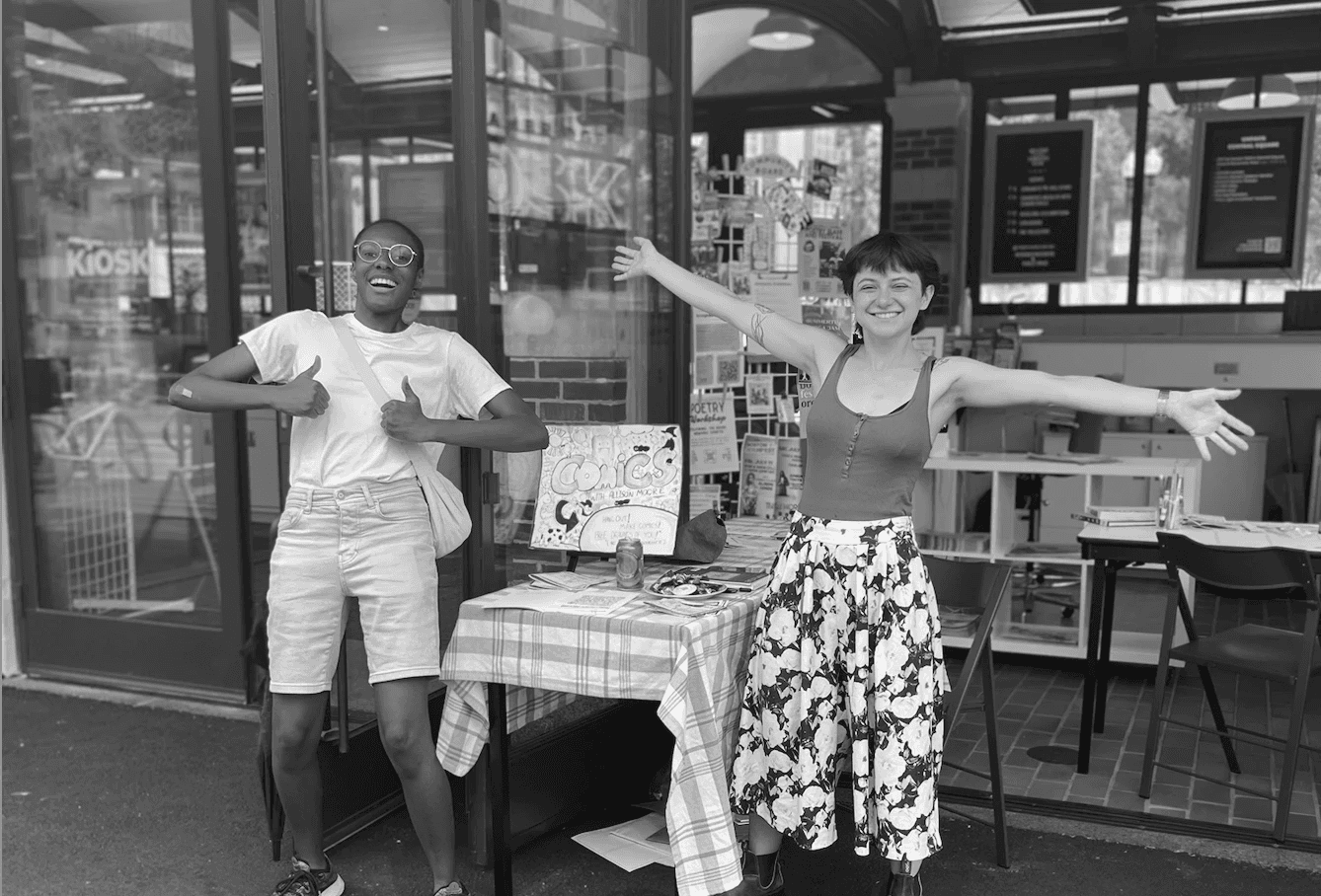
In 2025, following a city-led renovation, the building reopened as the Cambridge KiOSK: part visitor information center run by the Cambridge Office for Tourism, and part cultural space run by CultureHouse.
As we dreamt up early programming at this newly reopened historic site, we knew we had to honor its legacy. Providing global papers like the former newsstand didn't quite feel like the right solution for today; rather, it is local information-sharing and everyday connections that are currently in decline.
So, we experimented. We reimagined the kiosk as a news incubator of sorts, where visitors can share stories about the small moments and local places that shape their worlds.
In 2019, Out of Town News sold its last paper. For 64 years, the newsstand had bustled with morning regulars, international visitors, and celebrity encounters, but the historic site entered a period of transition.
In 2025, following a city-led renovation, the building reopened as the Cambridge KiOSK: part visitor information center run by the Cambridge Office for Tourism, and part cultural space run by CultureHouse.
As we dreamt up early programming at this newly reopened historic site, we knew we had to honor its legacy. Providing global papers like the former newsstand didn't quite feel like the right solution for today; rather, it is local information-sharing and everyday connections that are currently in decline.
So, we experimented. We reimagined the kiosk as a news incubator of sorts, where visitors can share stories about the small moments and local places that shape their worlds.

a growing collection of stories
a growing archive of stories
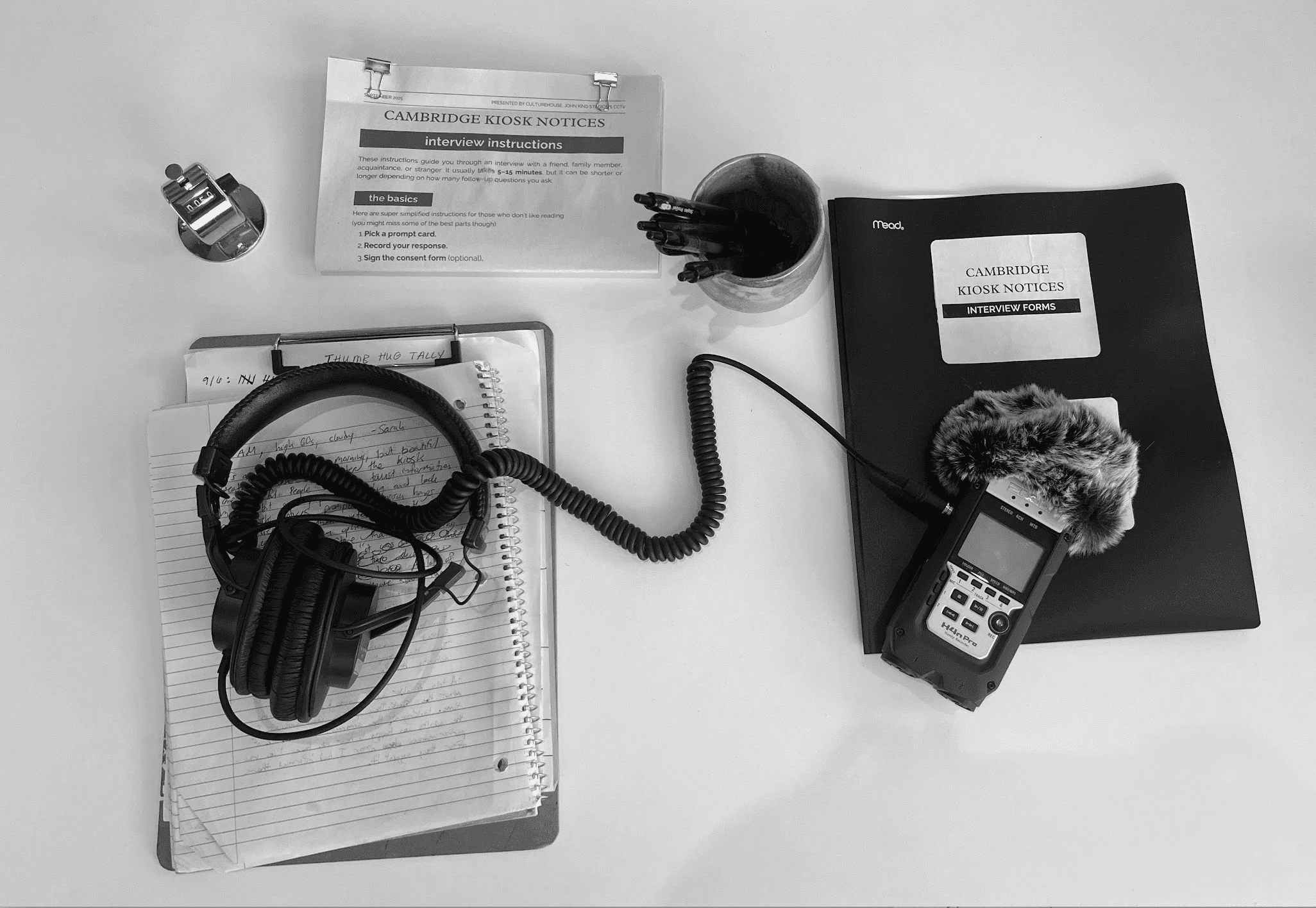
KiOSK Notices first invited participants to step into the role of local reporter by interviewing a friend, family member, acquaintance, or even a stranger. Since then, the project has evolved to focus on three distinct storytelling forms:
Interviews: Using prompt cards co-created by kiosk visitors, we heard from nearly 50 voices in just a few weeks.
Art: Through eight collaborative workshops, local artists and participants co-created masterpieces ranging from songs to original prints.
Written Reflections: At "third place voting booths," passersby contributed almost 100 written reflections about their favorite neighborhood hotspots.
These stories can be found in print editions of KiOSK Notices papers or listened to on our growing online archive.
KiOSK Notices first invited participants to step into the role of local reporter by interviewing a friend, family member, acquaintance, or even a stranger. Since then, the project has evolved to focus on three distinct storytelling forms:
Interviews: Using prompt cards co-created by kiosk visitors, we heard from nearly 50 voices in just a few weeks.
Art: Through eight collaborative workshops, local artists and participants co-created masterpieces ranging from songs to original prints.
Written Reflections: At "third place voting booths," passersby contributed almost 100 written reflections about their favorite neighborhood hotspots.
These stories can be found in print editions of KiOSK Notices papers or listened to on our growing online archive.


a living lab for civic life
a living lab for civic life
Beyond a creative project, the kiosk is a collaborative space where residents, artists, and researchers can observe and experiment with new ways of fostering civic life.
To ground our research in theory, we’ve partnered with Boston University's Initiative on Cities. Students from Dr. Merav Shohet's Psychological Anthropology class conducted on-the-ground fieldwork throughout Harvard Square, combining traditional anthropology methodology with CultureHouse’s observational approaches. Their research helps us understand the changing role of "third places" in Cambridge community life. Ultimately, we are using this data to identify gaps in neighborhood offerings and determine how CultureHouse can fill unmet needs.
Each interview, survey, and workshop is becoming part of a larger inquiry into how cities foster belonging. By blending participatory storytelling with collaborative research methods, the kiosk offers insights into:
how people use public and semi-public spaces,
what kinds of “third places” sustain connection, and
how local media can evolve to reflect community needs.
These learnings not only shape future programming at the Cambridge KiOSK, but also contribute to broader conversations about how cities can nurture a sense of belonging.
Beyond a creative project, the kiosk is a collaborative space where residents, artists, and researchers can observe and experiment with new ways of fostering civic life.
To ground our research in theory, we've partnered with Boston University's Initiative on Cities. Students from Dr. Merav Shohet's Psychological Anthropology class conducted on-the-ground fieldwork throughout Harvard Square, combining traditional anthropology methodology with CultureHouse’s approaches. Their research helps us understand the changing role of "third places" in Cambridge community life. We're using this data to identify gaps in neighborhood offerings and determine how CultureHouse can fill unmet needs.
Each interview, survey, and workshop is becoming part of a larger inquiry into how cities foster belonging. By blending participatory storytelling with collaborative research methods, the kiosk offers insights into:
how people use public and semi-public spaces,
what kinds of “third places” sustain connection, and
how local media can evolve to reflect community needs.
These learnings not only shape future programming at the Cambridge KiOSK, but also contribute to broader conversations about how cities can nurture a sense of belonging.
get in touch
get in touch
Cambridge KiOSK Notices was brought to life by KiOSK Fellow, Sarah Padgett, for CultureHouse. This project was a true collaborative effort, shaped by the incredible support of local artists and neighbors throughout the Harvard Square community.
Want to get involved or have questions? Don't hesitate to reach out!
Cambridge KiOSK Notices was brought to life by KiOSK Fellow, Sarah Padgett, for CultureHouse. This project was a true collaborative effort, shaped by the incredible support of local artists and neighbors throughout the Harvard Square community.
Want to get involved or have questions? Don't hesitate to reach out!
Sarah Padgett
Cambridge KiOSK Fellow
kiosknotices@gmail.com
Sarah Padgett
Cambridge KiOSK Fellow
kiosknotices@gmail.com