INSIGHTS
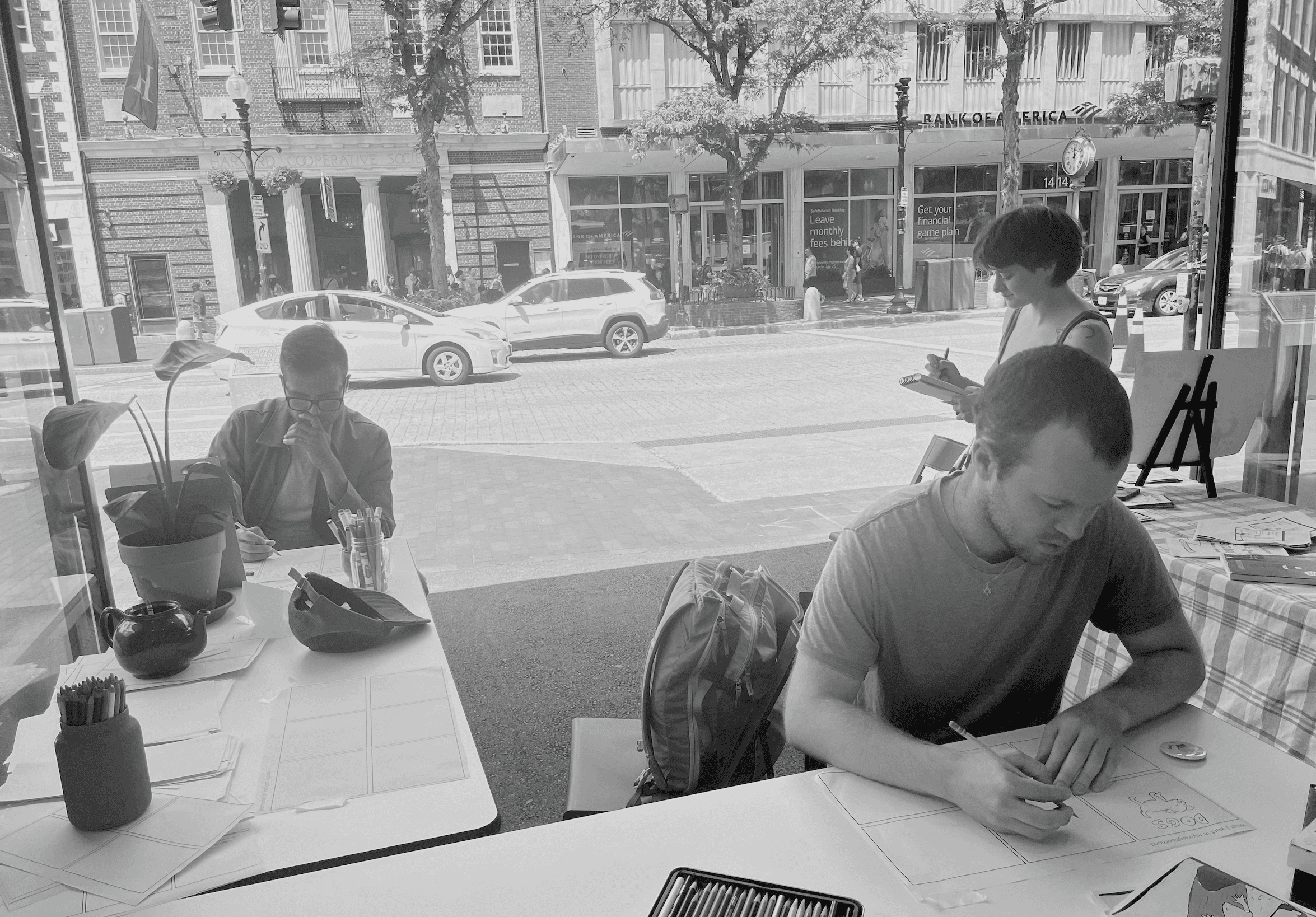
Each interview, survey, and workshop from the Cambridge KiOSK is becoming part of a larger inquiry into how cities foster belonging. By blending participatory storytelling with CultureHouse's observational approaches and local university partnerships, the kiosk offers insights into:
how people use public and semi-public spaces,
what kinds of “third places” sustain connection, and
how local media can evolve to reflect community needs.
student research
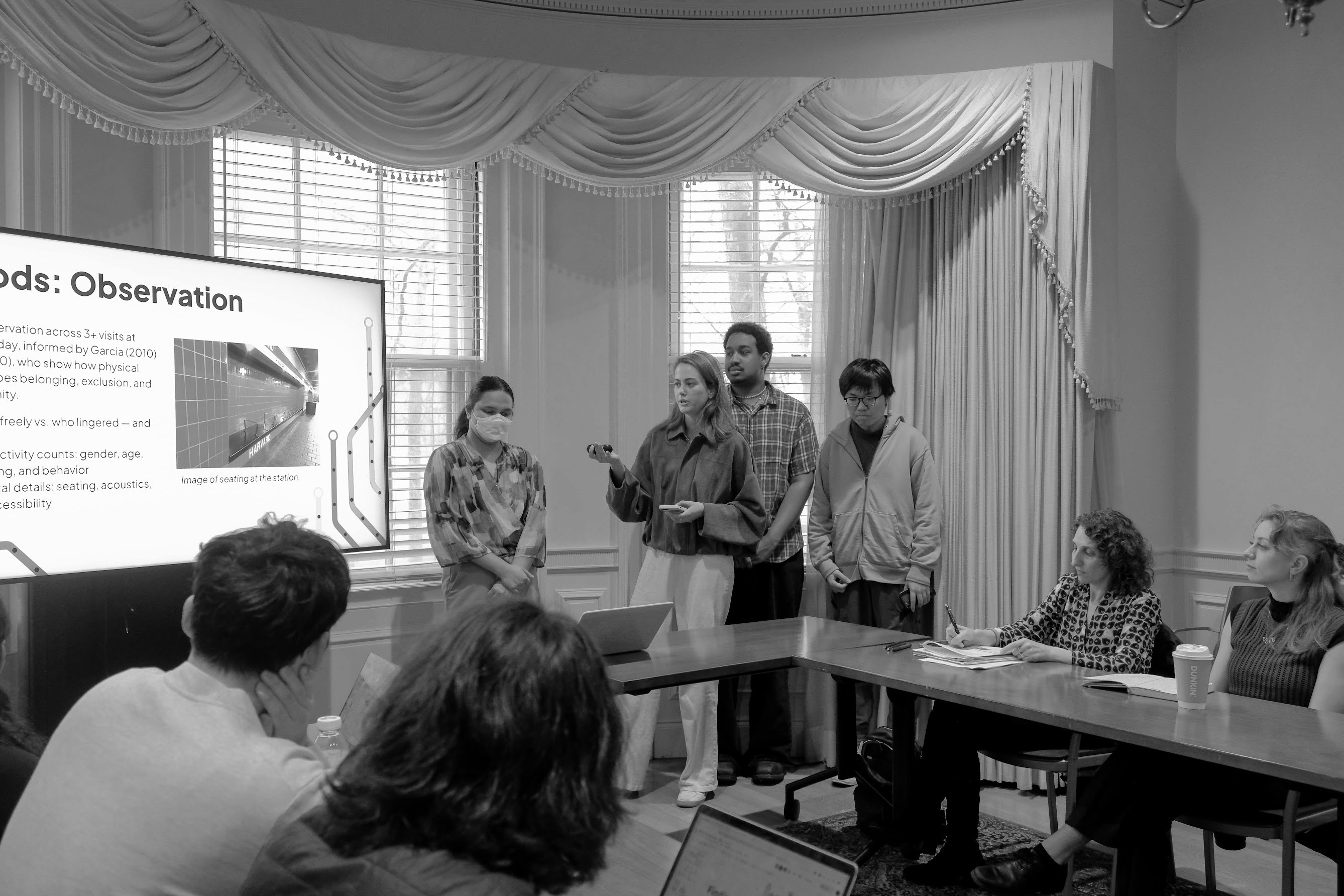
Photo by Caitlin Lee,
Boston University Initiative on Cities
Photo by Caitlin Lee, Boston University Initiative on Cities
Students from Dr. Merav Shohet's Psychological Anthropology class at Boston University, conducted on-the-ground fieldwork throughout Harvard Square. Combining traditional anthropology methodology with CultureHouse’s observational approaches, their research helps us understand the changing role of "third places" in Cambridge community life.
We're using this data to identify gaps in neighborhood offerings and determine how CultureHouse can fill unmet needs in the Harvard Square community.
emerging themes
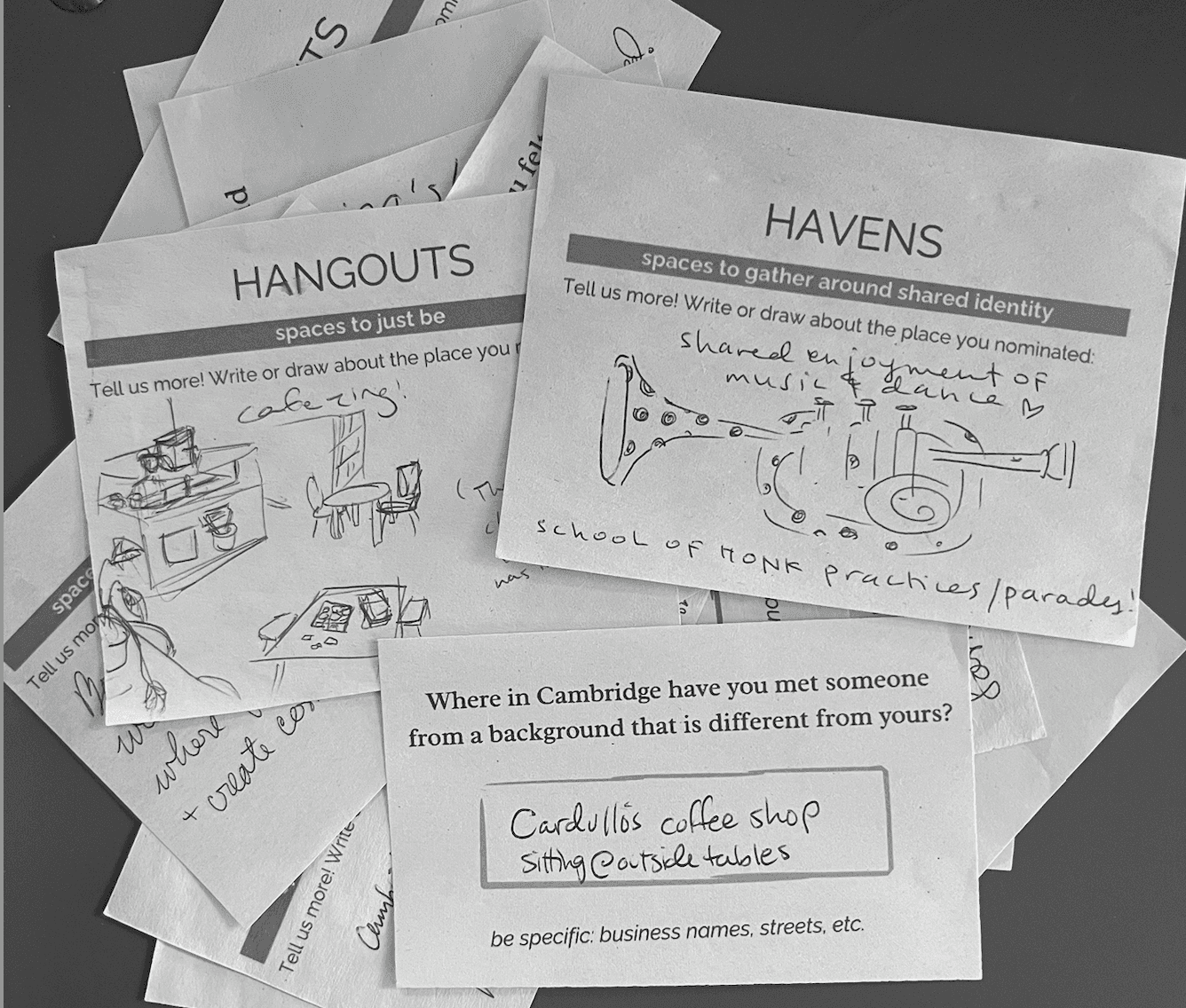
We analyzed the early KiOSK Notices Project interviews and surveys to see where Cambridge is finding connection today.
Colleges and churches stand out as the most widely-referenced public places. While stories about colleges emphasized friendship and personal growth, churches served as vital hubs for spirituality and secular gatherings alike–especially for those who expressed feeling lost or in need of support.
Restaurants and parks also remain frequently-referenced community staples for relationship building and rest respectively.
Interviewees lamented the closure of bars and cinemas, but rarely discussed recent attempts to actively visit these types of venues. However, when it comes instead of interviews to our survey series, The Cantab Lounge (a local bar) was the single most voted on favorite public hotspot with the most votes.
Many interviewees noted that their strongest community building isn't happening in public at all, but at home, through shared living arrangements and self-hosted events. As public options dwindle, it seems many of us are bringing "third places" into our own living rooms.
Read more about themes arising from our interview and survey series through our "newspaper" (see: "Where Have All the Gathering Places Gone?" and "As Many Third Places Close, Where Do We Get Together?").
listen to stories
listen to stories
INSIGHTS
Each interview, survey, and workshop from the Cambridge KiOSK is becoming part of a larger inquiry into how cities foster belonging. By blending participatory storytelling with CultureHouse's observational approaches and local university partnerships, the kiosk offers insights into:
how people use public and semi-public spaces,
what kinds of “third places” sustain connection, and
how local media can evolve to reflect community needs.
student research
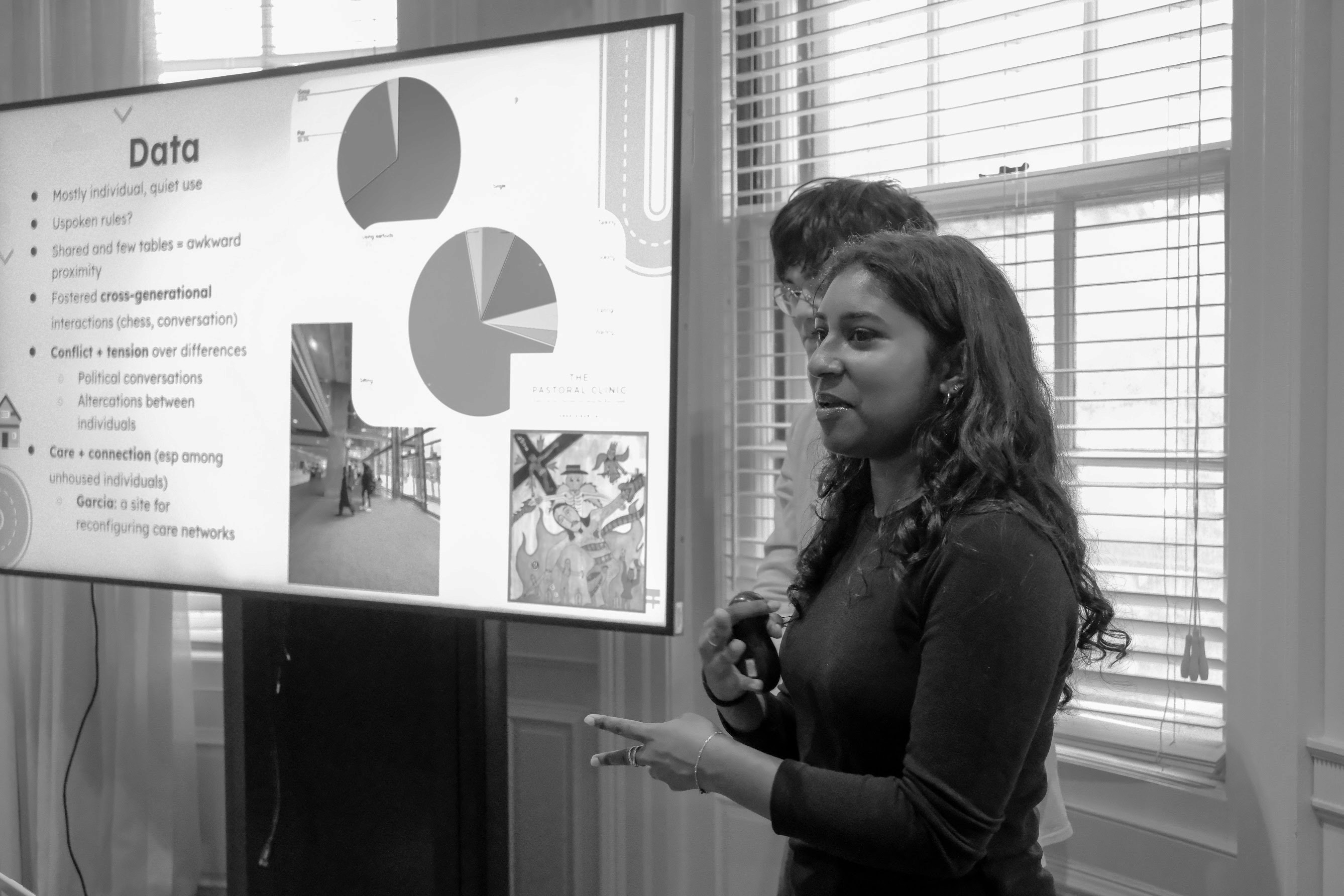
Photo by Caitlin Lee,
Boston University Initiative on Cities
Photo by Caitlin Lee, Boston University Initiative on Cities
Students from Dr. Merav Shohet's Psychological Anthropology class at Boston University, conducted on-the-ground fieldwork throughout Harvard Square. Combining traditional anthropology methodology with CultureHouse’s observational approaches, their research helps us understand the changing role of "third places" in Cambridge community life.
We're using this data to identify gaps in neighborhood offerings and determine how CultureHouse can fill unmet needs in the Harvard Square community.
emerging themes
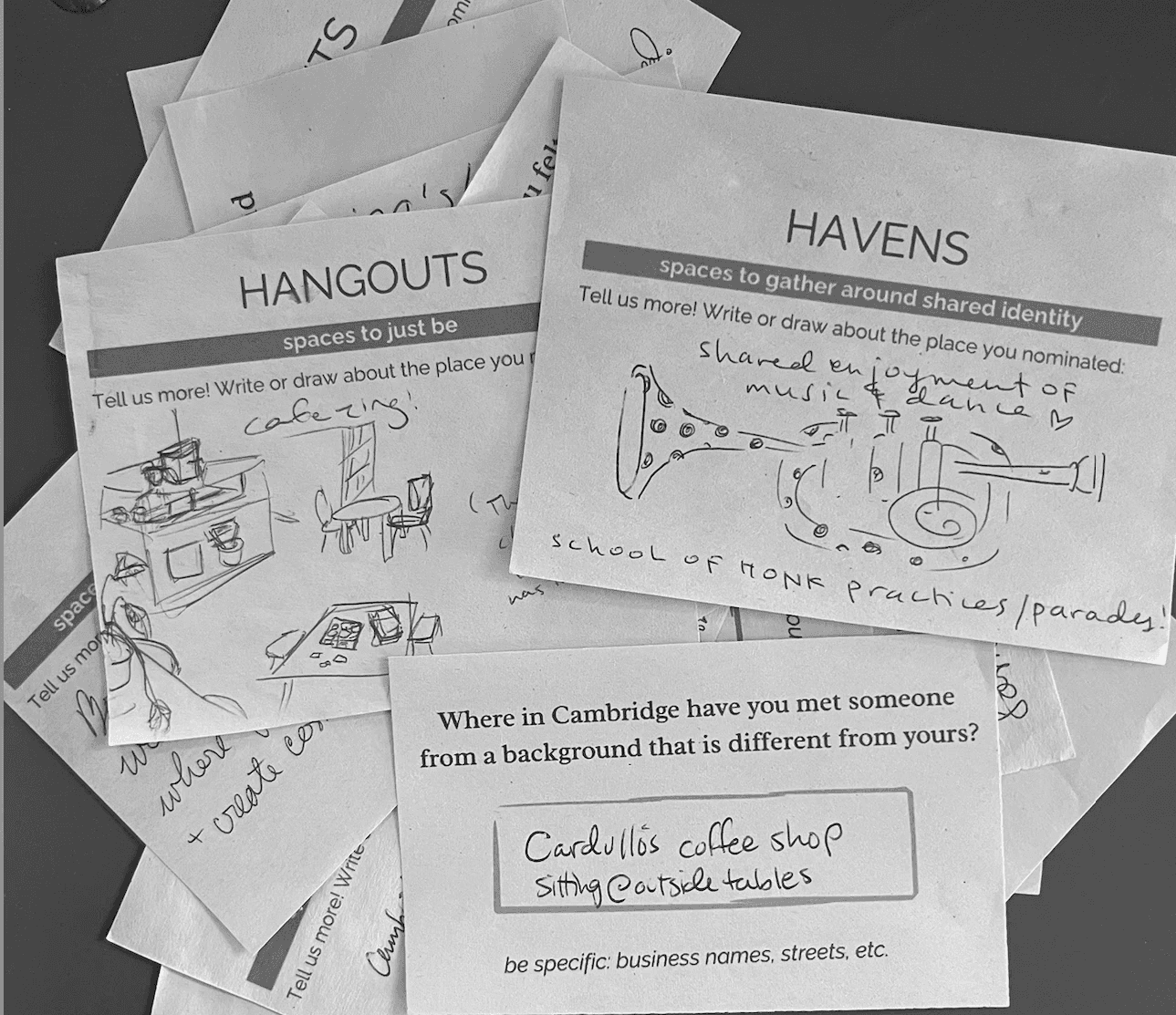
We analyzed the early KiOSK Notices Project interviews and surveys to see where Cambridge is finding connection today.
Colleges and churches stand out as the most widely-referenced public places. While stories about colleges emphasized friendship and personal growth, churches served as vital hubs for spirituality and secular gatherings alike–especially for those who expressed feeling lost or in need of support.
Restaurants and parks also remain frequently-referenced community staples for relationship building and rest respectively.
Interviewees lamented the closure of bars and cinemas, but rarely discussed recent attempts to actively visit these types of venues. However, when it comes instead of interviews to our survey series, The Cantab Lounge (a local bar) was the single most voted on favorite public hotspot with the most votes.
Many interviewees noted that their strongest community building isn't happening in public at all, but at home, through shared living arrangements and self-hosted events. As public options dwindle, it seems many of us are bringing "third places" into our own living rooms.
Read more about themes arising from our interview and survey series through our "newspaper" (see: "Where Have All the Gathering Places Gone?" and "As Many Third Places Close, Where Do We Get Together?").
listen to stories
listen to stories